Scott Smith, Regional Economist
The ACS offers insights how the country’s workers of varying educational attainment are distributed and how they are compensated.
As a point of reference, on average, U.S. workers who possess less than a high school diploma earn $19,954. High school graduates earn $27,868. Workers who earned an associate’s degree or attended college earned $33,988. College graduates earn $50,515. Recipients of graduate degrees make $66,944.
Nationally, men make more than women. For example, women earn between 32 and 34 percent less than males with equivalent educational background. Some, but not all, of this difference can be explained by a significant proportion of women who choose part-time employment.
The ACS also maps the composition of the labor force by highest educational attainment. Nationally, roughly 12 percent of the 25-year-and-older population has not graduated from high school. Almost 27 percent of the population has a high school diploma while 31 percent has advanced to an associate’s degree or has attended university. A little more than 30 percent has a bachelor’s degree.
What follows is a comparison of the population of the counties in the Southeast Region against the national statistics.
Grand County
On average, Grand County residents who possess a high school diploma earn $31,396. Workers who have earned an associate’s degree or attended college earn $23,051. College graduates earn $31,174. The reader should regard these median income statistics with some skepticism; analysts speculate that they are a product of large sampling errors. Holders of graduate degrees substantially out earn bachelors, $53,000 compared to $31,174.
Workers in Grand County earn 70 percent of the U.S. median. With respect to gender, women in the county earn 65 percent of men’s wages, while the analogous U.S. figure is 72 percent; however, these figures are suspect. This is evidenced in the ACS reports that women with less than a high school education earn 195 percent of the equivalent man’s income, while women who hold bachelor’s degrees only make 37 percent.
High school graduates in Grand County earn 113 percent of the U.S. median. Men earn 104 percent of the U.S. median for men, while women earn 106 percent of the U.S. median for women. Grand County residents who hold an associate’s degree or have attended college make 68 percent of the U.S. average. Men earn 61 percent of the U.S. median, while women earn 66 percent. College graduates in Grand County make 62 percent of the U.S. median. Men earn 66 percent of the U.S. median for men; in contrast, women earn only 32 percent of the U.S. median for women. Recipients of graduate degrees earn 79 percent of the U.S. median. Men make 65 percent, while women make 60 percent of their respective median.
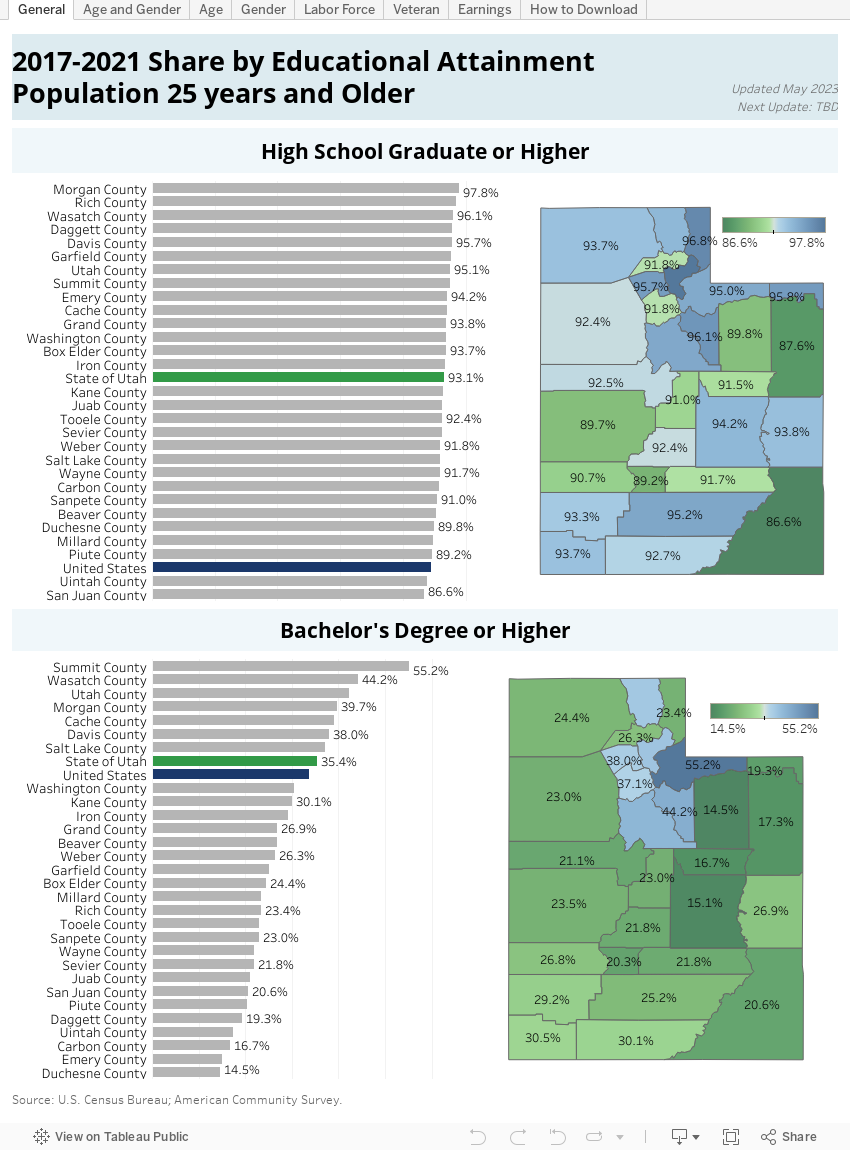
Grand County’s population differs from the U.S. by educational attainment. Almost 43 percent of the county’s population reports holding an associate’s degree or having attended college — the national number is 31 percent. Only 22 percent of the county’s population holds at least a bachelor’s degree — the national figure is 31 percent.
San Juan County
San Juan County who possess less than a high school diploma earn on average $18,906. High school graduates earn $24,705. Workers who have earned an associate’s degree or attended college earn $28,333. College graduates earn $41,354. Recipients of graduate degrees make $49,694.
Workers in San Juan County earn 82 percent of the U.S. median. With respect to gender, women earn 60 percent of men’s wages, while the analogous U.S. figure is 72 percent. It is interesting to note that women in San Juan County with college educations perform better than their national counterparts. Women with bachelor’s degrees earn 72 percent of their male counterparts’ income, while women who hold graduate degrees earn 90 percent of their male coworkers’ income. High school graduates in the county earn 89 percent of the U.S. median. Men earn 97 percent of the U.S. median for men, while women earn only 64 percent of the U.S median for women. San Juan County residents who hold an associate’s degree or have attended college make 83 percent of the U.S. median. Men earn 92 percent of the U.S. median, while women earn 81 percent of their respective statistic. College graduates in San Juan County make 81 percent of the U.S. median. Men earn 72 percent of the U.S median for men; in contrast, women earn 77 percent of the U.S. median for women. These statistics are suspect due to large sampling error. Recipients of graduate degrees earn 74 percent of the U.S. median. Men make 64 percent of the median; surprisingly, women make 86 percent of the median for women with graduate degrees.
San Juan County’s labor demographics differ markedly from the nations because of participation rates and educational attainment. For individuals with less than a high school education, more than 7.9 percent of the county population is not in the labor force — the U.S. number is 4.7 percent. More than 15 percent of county residents with a high school diploma do not participate in the labor market. The analogous national number is a little more than 7 percent. The county also has less college graduates than the nation as a whole — 19 percent of the county’s population possesses a bachelor’s degree of higher (the national figure is 31 percent).